


In our first two deep-dives, we covered the core financial engine in D365 Finance and the operational muscle in D365 Supply Chain Management (SCM). But what happens when your enterprise sells directly to real people, whether online or in physical retail stores?
Welcome to Part 3 of our D365 F&O mini-series: Dynamics 365 Commerce.
Dynamics 365 Commerce
Formerly known as D365 Retail, Dynamics 365 Commerce is an enterprise-level headless (a setup where the customer-facing front end the “head” is separated from the back-end business logic the “body”, allowing them to communicate via APIs) omnichannel platform which acts as an “umbrella” between backoffice ERP inventory/ledger logic, and the frontend buying experiences.
Omnichannel – a business approach that connects all sales and support methods – such as physical stores, websites, and mobile apps – to give shoppers a smooth and unified experience.
Let’s dive into the fundamental architecture blocks, highlight the major modules and see how AI fits into the unified commerce space.
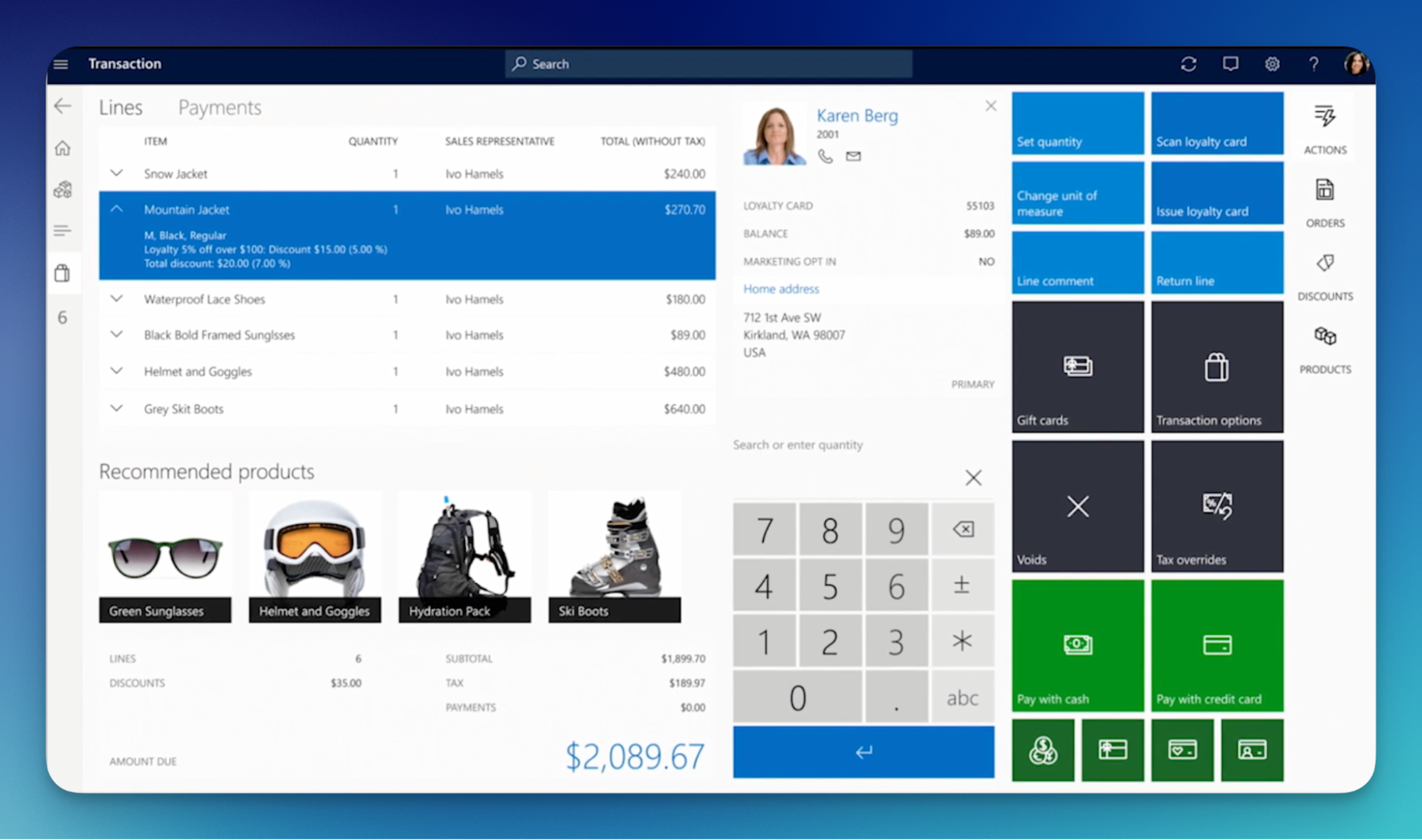
Core functions
D365 Commerce isn’t just an e-commerce plugin or a standalone cash register – it is an API-first, headless commerce platform built directly on the shared F&O architecture. Its capabilities rest on four primary operational pillars:
1. Unified Omnichannel Commerce
Modern customers expect to buy online and pick up in store (BOPIS), buy in store and ship to home (endless aisle), or initiate returns online for in-store refunds. D365 Commerce natively shares a single real-time engine for inventory, customer profiles, pricing, and promotions across digital storefronts, brick-and-mortar stores, call centers, and mobile devices.
2. Modern Headless Architecture & Extensibility
Because Commerce relies on the Commerce Scale Unit (https://learn.microsoft.com/en-us/dynamics365/commerce/dev-itpro/csu-core) and a composable API-first architecture, the front-end user experience is decoupled from backend business logic. You can use Microsoft’s native storefront or plug in custom head-ends (like mobile apps, social shopping, or third-party marketplaces) while keeping core pricing, tax, and inventory rules unified in F&O.
3. Native B2C & B2B Dual Capability
Historically, enterprises had to run separate software platforms for retail consumers (B2C) and business partners (B2B). D365 Commerce handles both on a single platform. It supports custom partner catalogs, trade agreement pricing, credit limits, account hierarchies, and purchase order checkout workflows right alongside consumer credit card checkouts.
4. Distributed Order Management (DOM) & Smart Fulfillment
Fulfilling an order shouldn’t be a guessing game. Distributed Order Management (DOM) automatically optimizes order routing using rules-based logic. If a customer orders three items online, DOM evaluates proximity, stock availability, shipping costs, and store capacity to determine whether to ship from a distribution center, split the order, or fulfill from a nearby retail store.
Module map
To master D365 Commerce, you have to understand both the back-office headquarters (HQ) configuration tools and the front-facing channel engines. Here is the detailed breakdown of the primary modules that make up the app:
1. Commerce Headquarters (HQ) & Channel Management
The central control tower where administrators configure retail channels, organizational hierarchies, registers, and global parameters.
- Key Functions:
- Channel Setup: Defines physical stores, online web stores, B2B portals, and call centers with unique currency, language, and tax rules.
- Org Hierarchies: Maps channels to legal entities, cost centers, and reporting structures for seamless posting to the General Ledger.
- Data Synchronization (CDX): Manages Commerce Data Exchange (CDX) sync jobs to push master data (pricing, products) down to channel databases and pull transaction logs back up.
2. Store Commerce (Point of Sale / POS)
The multi-platform point-of-sale application running on modern retail hardware, tablets, or phones (Windows, iOS, Android, Web).
- Key Functions:
- Modern POS & Cloud POS: Supports full touch-screen cash register operations, mobile line busting, and clienteling (viewing customer history and preferences).
- Offline Support & Resiliency: Stores can continue processing transactions offline during network outages, auto-syncing when connectivity resumes.
- Hardware Station Integration: Direct connectivity with receipt printers, barcode scanners, payment terminals, cash drawers, and weight scales.
3. Site Builder & E-Commerce Web Authoring
A visual, low-code content management system (CMS) and page authoring tool for building e-commerce storefronts.
- Key Functions:
- Visual Page Builder: Drag-and-drop web authoring using modular UI components (carousels, product detail pages, checkout flows, banners).
- Theme & Template Management: Enforces brand design templates across pages, fragments, and responsive mobile layouts.
- Localization & Asset Management: Centralized digital asset management for product media, multi-language translation management, and country-specific web pages.
4. Distributed Order Management (DOM)
An intelligent order orchestration engine that calculates optimal fulfillment locations for complex omnichannel orders.
- Key Functions:
- Rules-Based Fulfillment: Configures parameters to minimize shipping cost, avoid order splits, prioritize aging inventory, or honor store capacity limits.
- Exception Handling & Rerouting: Automatically reroutes fulfillment tasks if a store rejects an item pick due to stock damage or discrepancy.
5. Call Center / Service Operations (MOTO)
Specialized order entry and customer service module designed for Mail Order / Telephone Order (MOTO) teams.
- Key Functions:
- Order Entry & Upsell: Rapid customer searching, phone order entry, cross-sell/upsell recommendations, and script prompts during calls.
- Payment Holds & Fraud Checks: Holds orders for manual review, security code validation, or line-item price override authorization.
6. Pricing, Discounts & Promotions Engine
A unified pricing engine that guarantees consistent pricing rules across every channel – online, in-store, or B2B.
- Key Functions:
- Omnichannel Discounts: Manages complex promotional rules like simple discounts, mix-and-match offers, quantity thresholds, and buy-one-get-one (BOGO) promotions.
- Coupons & Promo Codes: Generates and validates single-use or multi-use promo codes tied to specific customer segments or marketing campaigns.
- B2B Trade Agreements: Executes customer-specific contract pricing and tiered volume discounts based on B2B agreements.
7. Customer Loyalty, Gift Cards & Clienteling
Tools designed to foster customer retention, drive repeat purchases, and personalize interactions across all touchpoints.
- Key Functions:
- Loyalty Programs & Tiers: Manages reward point earning/redemption rules, tier structures (e.g., Silver, Gold, Platinum), and promotional point multipliers.
- Omnichannel Gift Cards: Issues and redeems physical or digital gift cards seamlessly between physical stores and web channels.
- Clienteling Notes: Allows store associates to capture customer preferences, wishlists, and purchase histories to deliver tailored in-person service.
8. B2B Commerce Engine
Extends e-commerce capabilities to support self-service buying for wholesale partners and organizational clients.
- Key Functions:
- Account Management: Enables B2B client admins to manage their own employee user permissions, spending limits, and delivery locations.
- Custom Product Catalogs: Displays curated product catalogs and specific price lists based on the signed-in client’s contract.
- On-Account Purchasing: Native support for purchasing via purchase orders (PO), credit terms, and line-of-credit checks.
9. Merchandising & Product Catalog Management
Manages how products are grouped, categorized, enriched, and assigned to specific selling channels.
- Key Functions:
- Channel Assortments: Determines exactly which products are available for sale in specific stores, countries, or web channels.
- Category Hierarchies: Builds navigation taxonomies for web search and POS layout grids.
- Product Attributes: Manages rich specifications (color, size, material, care instructions) used for filtering and search indexing.
10. Ratings & Reviews
A native customer feedback management module that ingests, moderates, and displays consumer product reviews.
- Key Functions:
- Review Submission & Moderation: Allows customers to post reviews and star ratings online, complete with an administrative portal for content moderation.
- Sentiment Analytics: Connects customer ratings directly back to merchandising insights to identify quality control issues on returned items.
11. Retail Financial Closing & Statement Posting
The financial bridge that consolidates daily channel sales, tender declarations, and inventory deductions into the General Ledger.
- Key Functions:
- Tender Declaration & Shift Closing: Tracks drawer cash, card totals, gift card redemptions, and safe drops per shift.
- Statement Posting: Summarizes hundreds of thousands of daily POS micro-transactions into aggregated journal postings for GL revenue, tax, and inventory accounts.
12. Fraud Protection & Payment Integration
Protects revenue by integrating payment processing gateways and AI-driven fraud detection.
- Key Functions:
- Native Payment Gateways: Out-of-the-box integration with Adyen (and support for custom connectors) with payment tokenization and PCI compliance.
- Dynamics 365 Fraud Protection: Evaluates transaction risk in real time to prevent purchase fraud, account takeover, and return abuse.
The next generation of Dynamics 365 Commerce
Microsoft has brought heavy Copilot and AI capabilities to D365 Commerce, helping content creators, store managers, and operations teams work faster:
- Copilot in Site Builder (Generative Merchandising Content): E-commerce teams can generate compelling, SEO-friendly product descriptions, blog content, and promotional marketing banners directly inside Site Builder using simple natural-language prompts.
- Copilot for Retail Statement Insights: Financial controllers spend hours debugging failed statement posting jobs. Copilot analyzes failed statement logs and provides plain-language summaries highlighting specific errors – like price overrides or tender mismatches—so teams can resolve and close statements quickly.
- Copilot for Merchandising Data Validation: Incomplete product attributes cause missed sales. Copilot automatically scans merchandising configurations, flags missing images or missing category tags, and suggests fixes before channels go live.
- AI-Powered Product Recommendations: Utilizes machine learning to serve context-aware product suggestions (“People also bought,” “Frequently bought together,” “Trending items”) on web pages and POS (the digital display monitor used at a checkout counter to ring up items, calculate totals, and process customer payments.) screens.
- Azure AI Search & Natural Language Discovery: Replaces keyword search with semantic product search. Customers typing “breathable trail running outfit for summer” get relevant gear groupings instead of zero search results.
- Fraud Prevention AI Scoring: Uses machine learning models trained on millions of cross-merchant signals to assign real-time risk scores to incoming orders, minimizing false declines while blocking fraudulent transactions.
Commerce Bridge the Gap
If you are working in the support or functional consulting space, you should know that D365 Commerce is where ERP complexity meets customer expectations.
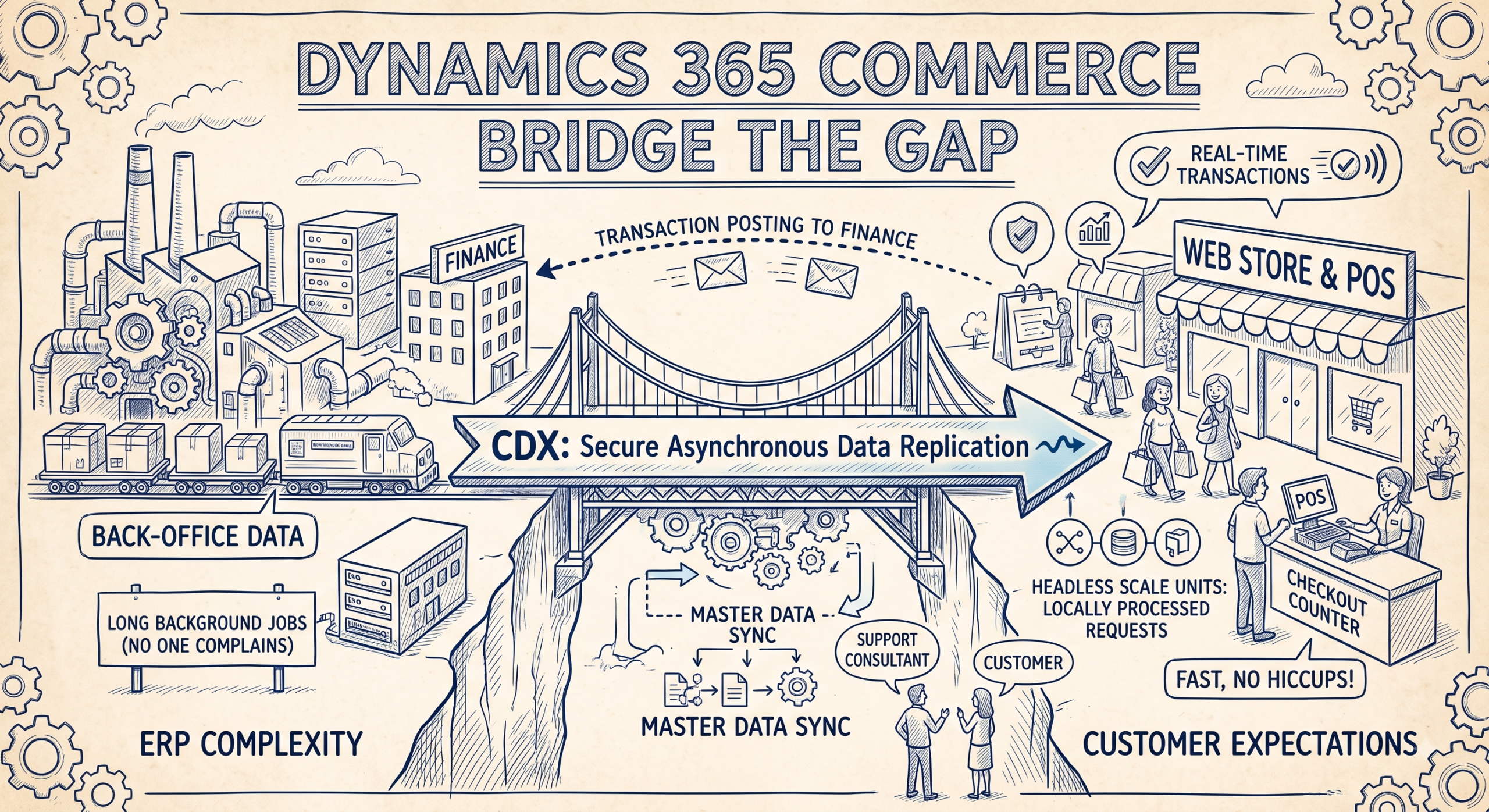
In other words, while a background job for a back-office module is taking 10 minutes longer than expected, nobody will complain about it. However, any hiccup in the commerce channel, be it a POS or a web store, immediately impacts the customer at the checkout counter. Therefore, understanding how to synchronize databases in real-time from channel to headquarters using CDX (Commerce Data Exchange is the secure asynchronous data replication and synchronization engine used in Microsoft Dynamics 365 Commerce to transfer master data), what headless scale units are needed to process requests, and how transactions are posted to Finance after being placed in Commerce are just a few of the questions that need to be asked.
Stay tuned for Part 4 of our D365 F&O application series, where we’ll explore Dynamics 365 Project Operations!